Gentle Fall Exfoliation: How Often to Exfoliate in Autumn (By Skin Type)
✅ Reviewed against 2026 dermatology guidance
Every September, the same thing happens to my skin. The glow I worked so hard for all summer starts looking a little flat. Fall exfoliation isn’t about doing less skincare — it’s about doing the right amount, less often, with a lot more patience for your barrier.
This guide walks through exactly how to shift your exfoliation routine for autumn: how often to exfoliate in fall, which acids are gentle enough for sensitive, barrier-stressed skin, and a real 4-week plan to transition without your skin panicking in between. I’ve also built a quick calculator at the bottom of the intro section so you can get a personalized starting frequency in under a minute.
Quick answer, if you’re short on time Most skin types should drop exfoliation to 1–3x per week in fall, prioritize gentle PHA or low-percentage lactic acid over strong AHAs, and always follow with a barrier-supporting moisturizer — never a bare acid step alone. Sensitive or already-compromised skin may need to pause actives entirely for 1–2 weeks first.
Why Your Skin Reacts Differently to Exfoliation in Fall
Summer skin and fall skin are not the same skin, even though they’re attached to the same face. Warmer months mean more oil production, more sweat, more humidity in the air holding moisture against your skin — all of which buffer the effects of exfoliating acids. This isn’t just anecdotal — peer-reviewed research confirms that low humidity and lower temperatures directly reduce skin barrier function, making skin more vulnerable to irritation from mechanical and chemical stress.
As temperatures drop and indoor heating kicks in, humidity falls, oil production slows, and your skin barrier has less natural cushioning to absorb the same product you used in July.
This is why a routine that felt “gentle” all summer can suddenly cause tightness, flaking, redness, or a stinging sensation in early autumn — the acid concentration didn’t change, but your skin’s tolerance did.
Fall Exfoliation Frequency Calculator
Not sure how often your skin can comfortably handle exfoliation as the weather changes? Use the calculator below to find a gentle autumn starting frequency, a suitable exfoliant family, and a simple four-week transition plan based on your skin type, current condition, and use of other active ingredients.
PERSONALIZED AUTUMN SKINCARE TOOL
Find Your Gentle Fall Exfoliation Frequency
Answer five quick questions to receive a personalized starting frequency, exfoliant type, weekly schedule, and barrier-support tip for autumn.
YOUR PERSONALIZED STARTING PLAN
Your Gentle Fall Exfoliation Routine
Suggested Frequency
Best Exfoliant Type
Suggested Weekly Schedule
Barrier-Support Tip
Why This May Suit Your Skin
What to Avoid
Your 4-Week Transition Plan
Important Safety Note
This calculator is intended for general education and self-reflection only. It does not diagnose skin conditions or replace advice from a dermatologist or qualified healthcare professional. Always follow your product instructions, patch test new products, and use broad-spectrum sunscreen during the day.
Signs Your Skin Is Ready vs Not Ready for Exfoliation
| Your skin is ready | Wait a little longer |
| Comfortable after cleansing | Tight after cleansing |
| No stinging | Products sting |
| No visible flakes | Flaking |
| Even texture | Rough patches |
| Comfortable with moisturizer | Moisturizer burns |
Board-certified dermatologists caution that exfoliating already dry, summer-stressed skin can strip away even more moisture — the better move is to moisturize more, not exfoliate more.
Not sure whether your skin barrier is actually damaged or simply dehydrated? Before increasing exfoliation, read my complete guide to dehydrated and damaged skin barriers. You can also take my personalized Skin Barrier Quiz to better understand your skin’s current condition and find out whether your barrier may need more recovery before reintroducing exfoliating acids.
How Often to Exfoliate in Fall by Skin Type
The core principle dermatologists at the American Academy of Dermatology point to is simple: the more aggressive the exfoliation method or acid, the less often it should be used — which is exactly why frequency needs to shift by skin type and product strength, not stay fixed year-round.
| SKIN TYPE | FALL FREQUENCY | BEST ACID TYPE | WATCH FOR |
|---|---|---|---|
| Dry | 1x per week | Lactic acid (low %) or PHA | Flaking, tightness after cleansing |
| Sensitive / reactive | 0–1x per week | PHA (gluconolactone) or enzyme | Stinging, visible redness, heat sensation |
| Combination | 2x per week | Mandelic acid or low-% AHA blend | Dryness on cheeks, oil rebound on T-zone |
| Oily / acne-prone | 2–3x per week | Salicylic acid (BHA), used gently | Over-drying leading to more oil production |
| Normal / balanced | 2x per week | Glycolic or lactic acid, moderate % | Skipping moisturizer after acid steps |
General starting guidance for fall 2026. Individual tolerance varies — always introduce changes one at a time.
Signs You're Over-Exfoliating This Fall
- Skin feels tight within an hour of cleansing, even after moisturizer
- New sensitivity to products you've used for months without issue
- Visible flaking or rough patches, especially around the nose and cheeks
- A dull, slightly reddened look that wasn't there in summer
- Breakouts appearing in new areas as the barrier struggles to regulate oil
Chemical Exfoliant Comparison: Which Acid Fits Your Fall Skin
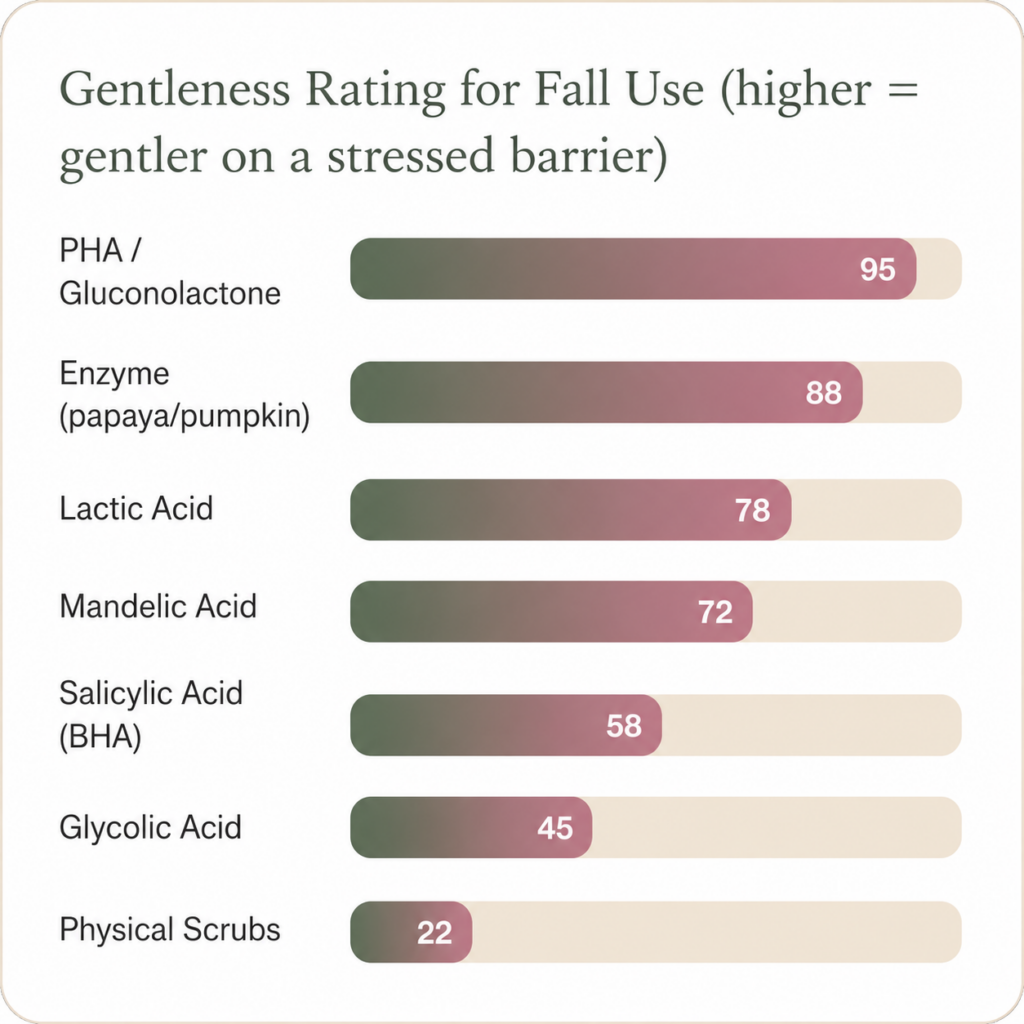
My approach: I don’t rely on a single exfoliating product throughout autumn. Instead, I adjust my routine depending on how my skin feels. On weeks when my skin is more reactive, I reach for a very gentle exfoliating option. When my skin feels balanced, I may use a stronger chemical exfoliant.
Your 4-Week Fall Exfoliation Transition Plan
If you were exfoliating daily or near-daily through summer, don't drop to zero and don't keep going as-is — ease into it. Here's the plan I use with my own routine every September.
| Week | What to Do | Goal |
| Week 1 | Pause all chemical exfoliants. Focus on hydration and barrier repair only with ceramides, hyaluronic acid, and a gentle moisturizer. | Allow your skin barrier to recover after summer and reduce existing irritation before reintroducing active ingredients. |
| Week 2 | Reintroduce exfoliation once per week using a PHA or enzyme exfoliant. Apply it in the evening and follow immediately with a nourishing moisturizer. | Reintroduce exfoliation gradually while monitoring your skin’s response. |
| Week 3 | If your skin remains comfortable, increase exfoliation to twice per week. If you notice tightness, dryness, or redness, continue with once weekly instead. | Find your skin’s ideal autumn exfoliation frequency without compromising the barrier. |
| Week 4 | Continue with the frequency that works best for your skin. Reassess your routine every few weeks as temperatures and humidity continue to change throughout autumn. | Establish a sustainable seasonal routine that supports healthy skin renewal and long-term barrier function. |
What to Pair With Fall Exfoliation
- Always follow with moisturizer — never leave an acid step "bare," especially once humidity drops
- Keep SPF non-negotiable — exfoliated skin is more sun-reactive, even under cloudy fall skies
- Avoid stacking actives — don't combine exfoliation nights with retinol or vitamin C nights; alternate instead. Dermatologist at the American Academy of Dermatology specifically warn against exfoliating while using prescription retinoids or products containing retinol or benzoyl peroxide, since combining them can worsen dryness or trigger breakouts.
- Add a barrier-repair layer — ceramide or fatty-acid-rich creams help offset what exfoliation temporarily disrupts
- Reduce, don't eliminate, hydration steps — a hydrating mist or essence before moisturizer helps buffer drier fall air
A note on "skin cycling" If you've seen the term "skin cycling" — alternating exfoliation, retinoid, and recovery nights — fall is actually the easiest season to try it. The built-in rest nights are exactly what a barrier under seasonal stress needs.
Frequently Asked Questions
How often should you exfoliate in the fall?
Most people should reduce to 1–3 times per week in fall, depending on skin type. Dry and sensitive skin generally do best at 0–1x per week, while oily or combination skin can often tolerate 2–3x per week. The key change from summer isn't the acid itself — it's the frequency.
Should I stop exfoliating completely when the weather changes?
Not usually. A short 1–2 week pause can help if your skin is already showing signs of a stressed barrier (tightness, flaking, redness), but most skin benefits from continuing exfoliation at a reduced frequency rather than stopping entirely, since it supports cell turnover and product absorption year-round.
What is the gentlest exfoliating acid for sensitive skin in fall?
PHA (polyhydroxy acid, such as gluconolactone) is generally considered the gentlest chemical exfoliant because its larger molecule size means slower, shallower penetration. Enzyme exfoliants (like papaya or pumpkin enzyme) are a close second and are a good option for skin that reacts to most acids.
Can I still use retinol and exfoliating acids in the same fall routine?
Yes, but not on the same night. Alternating — for example, acids on Monday and Thursday, retinol on Tuesday and Friday — helps prevent over-exfoliation and gives your barrier recovery nights in between, which matters more in fall than in summer. If you’re just getting started with retinoids, my beginner-friendly retinol guide explains how to build a routine without overwhelming your skin barrier.
Why does my skin feel more sensitive to exfoliation in autumn than in summer?
Lower humidity and indoor heating reduce the moisture available in and on your skin, so your barrier has less natural buffer against active ingredients. The same product and percentage you used comfortably in July can feel stronger in October simply because your skin's baseline hydration has changed.
Is physical (scrub) exfoliation okay for fall, or should I switch to chemical exfoliants?
Chemical exfoliants (acids or enzymes) are generally recommended over physical scrubs in fall, since scrubs create micro-tears that are more noticeable and slower to heal once skin is already drier and less resilient. If you prefer a physical texture, choose a very fine, low-abrasion formula and limit it to once weekly at most.
How do I know if I've over-exfoliated and need to stop?
Watch for tightness that doesn't resolve with moisturizer, visible flaking, a shiny or "raw" appearance, stinging when applying normally-tolerated products, or new breakouts in areas that were previously clear. If you notice two or more of these, pause all exfoliation and actives for 5–7 days and focus on barrier repair before reintroducing anything.
Do I need a different moisturizer for fall if I'm exfoliating?
Many people benefit from moving to a richer, more emollient moisturizer in fall regardless of exfoliation, since the air itself is drier. If you exfoliate, pairing it with a moisturizer that contains ceramides or fatty acids helps replace lipids the acid step temporarily disrupts.
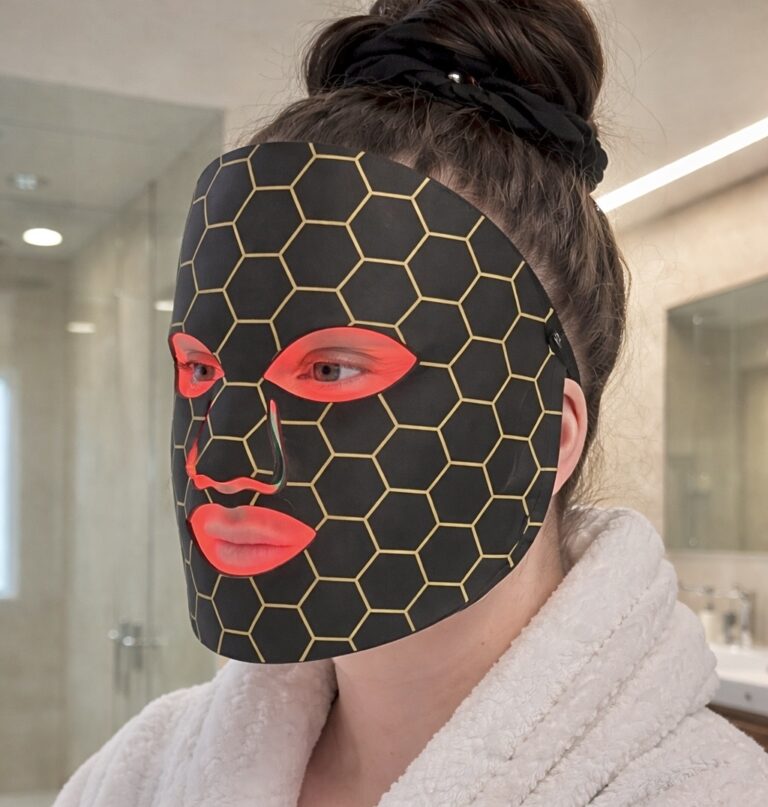
Once your skin barrier feels healthy again, treatments such as LED light therapy may help support recovery and maintain skin quality without increasing exfoliation frequency.
Common Fall Exfoliation Mistakes
- Using retinol and acids on the same night.
- Skipping moisturizer after exfoliation.
- Stopping sunscreen because summer is over.
- Ignoring early signs of barrier damage.
Final Thoughts
Fall exfoliation isn't about willpower or discipline — it's about listening to what your skin is actually telling you as the season shifts. Start with less than you think you need, add barrier support generously, and let your skin's response.
I'd genuinely love to hear about your experience, favourite exfoliating products, or any tips that have helped your skin transition into fall. Leave a comment below and let's help each other build healthier seasonal skincare routines.
This article is intended for educational purposes and should not replace personalized medical advice. If you have persistent irritation, eczema, rosacea, or another skin condition, consult a board-certified dermatologist before introducing new exfoliating products. This article may also contain affiliate links. I only recommend products that I personally use, trust, or believe may provide value to my readers