How to Get Korean Glass Skin Without Irritating Sensitive Skin
Most korean glass skin routine advice looks beautiful on social media. Ten steps, five serums. Layer after layer of products promising perfectly reflective skin.
But if your skin is sensitive, reactive, redness-prone, or easily overwhelmed, copying those routines can leave your skin barrier stressed instead of glowing.
Have you ever tried a routine everyone seemed to love, only to end up with more redness, stinging, or irritation than glow?
If you’re nodding along, you’re definitely not alone.
The truth is that glass skin is not about using more products.
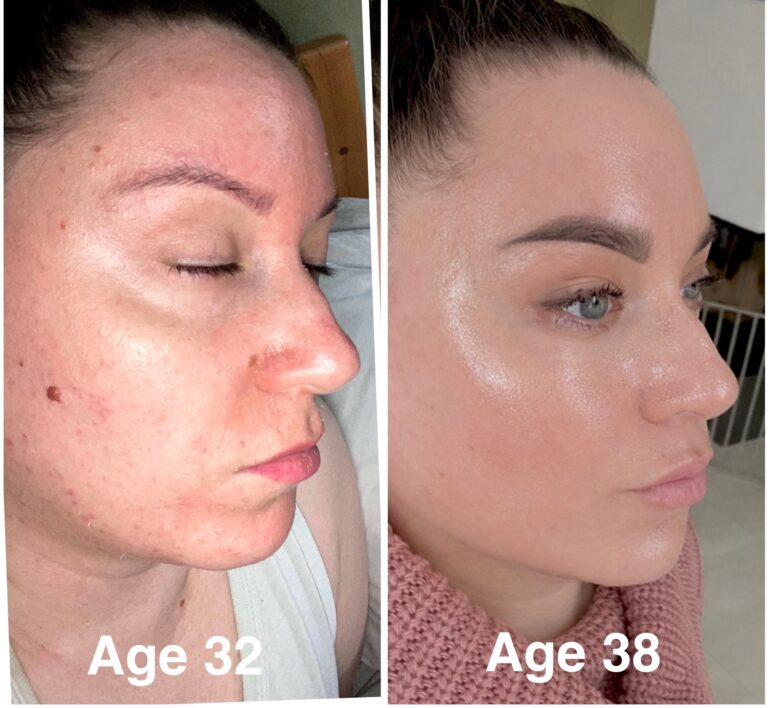
It is about creating skin that looks naturally smooth, hydrated, calm, and healthy because your barrier is functioning well. That was the biggest lesson I learned.
The moment I stopped chasing glow and started supporting my skin barrier, the glow became much easier to maintain.
What Glass Skin Actually Means
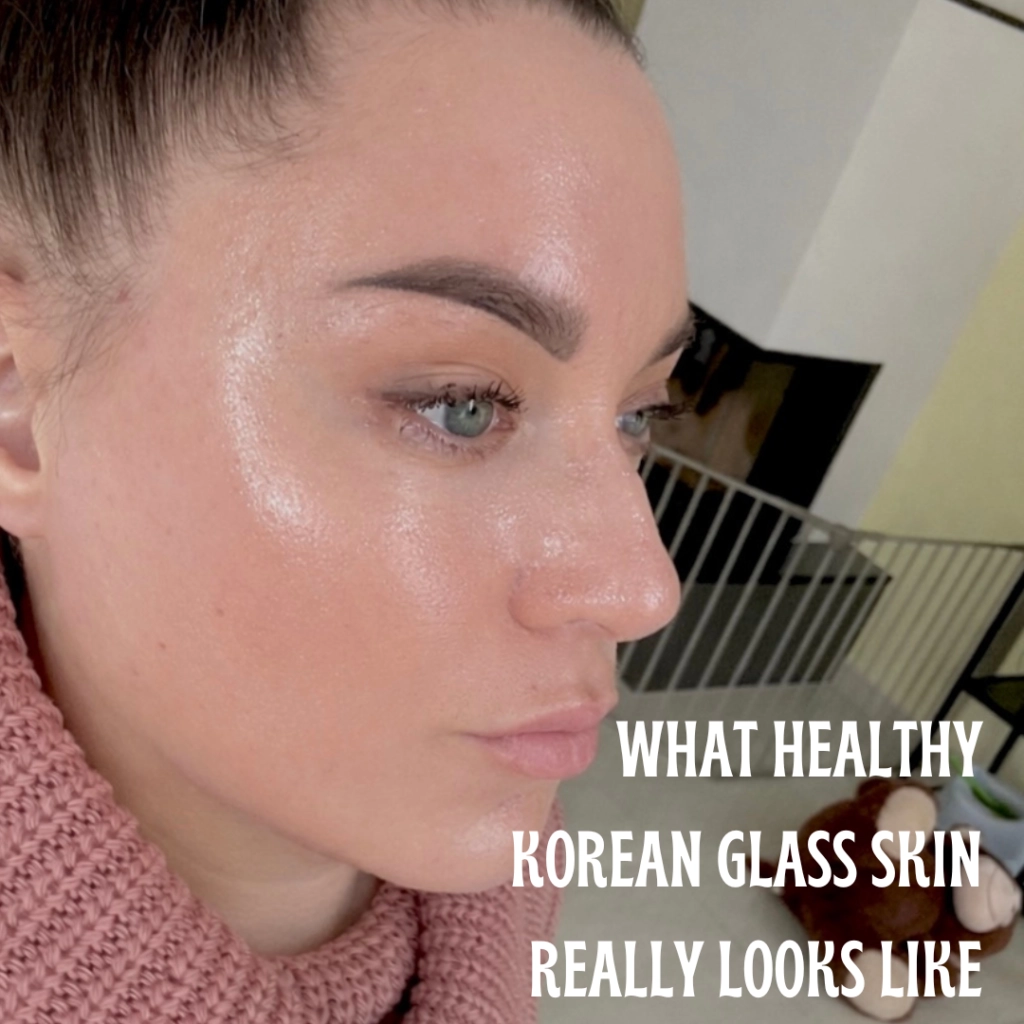
Many people think Korean glass skin means skin that looks shiny, – it doesn’t.
Glass skin refers to skin that appears:
- deeply hydrated
- smooth in texture
- even in tone
- calm and comfortable
- naturally radiant without heavy makeup
When was the last time your skin actually felt comfortable? Not shiny, not covered with makeup. Just calm and hydrated.
Dermatologists and Korean skincare experts consistently point to hydration, barrier support, and gentle consistency as the foundation of glass skin. Dermatology guidance consistently emphasizes the value of gentle cleansing, regular moisturization, limited irritation, and daily sun protection as the foundation of healthy-looking skin. Research on skin-barrier function also supports the role of moisturization and barrier lipids in improving hydration and resilience.
If your skin often feels tight, irritated, dehydrated, or unpredictable, focusing on those foundations will usually get you closer to glass skin than adding stronger actives.
Why Most Glass Skin Routines Fail Sensitive Skin
One of the biggest mistakes I see is trying to achieve glow through intensity.
More exfoliation, more acids, more active ingredients, more steps. This shift in priorities isn’t just personal experience — a 2024 multinational survey published in the Journal of Cosmetic Dermatology found that skin barrier health, hydration, and sensitivity are now the top three skincare concerns worldwide, ahead of anti-aging or brightening.
Do you ever feel like the harder you try to “fix” your skin, the worse it becomes?
I know I did. For a long time, I thought more effort would finally get me the results I wanted.
But if your skin barrier is already struggling, adding more stimulation often creates the opposite result:
- redness
- irritation
- dehydration
- sensitivity
- uneven texture
Sensitive skin usually responds better to support than force. The goal is not to make your skin work harder.
Common Glass Skin Mistakes and Gentler Alternatives
| Common mistake | Why it may cause problems | Gentler alternative |
| Starting several new products together | Makes irritation difficult to trace | Introduce one product at a time |
| Exfoliating daily | Can increase dryness and sensitivity | Begin once weekly or pause if irritated |
| Layering multiple strong actives | Raises the overall irritation burden | Alternate active and recovery nights |
| Using fragranced products on reactive skin | Fragrance may trigger sensitivity in some users | Choose fragrance-free options when possible |
| Confusing shine with hydration | Occlusive or oily products may look glossy without correcting dehydration | Use humectants plus moisturizer |
| Copying a fixed 10-step routine | Every layer adds another potential irritant |
The goal is to make your skin feel safe enough to function properly.
The Gentle Korean Glass Skin Routine I Recommend
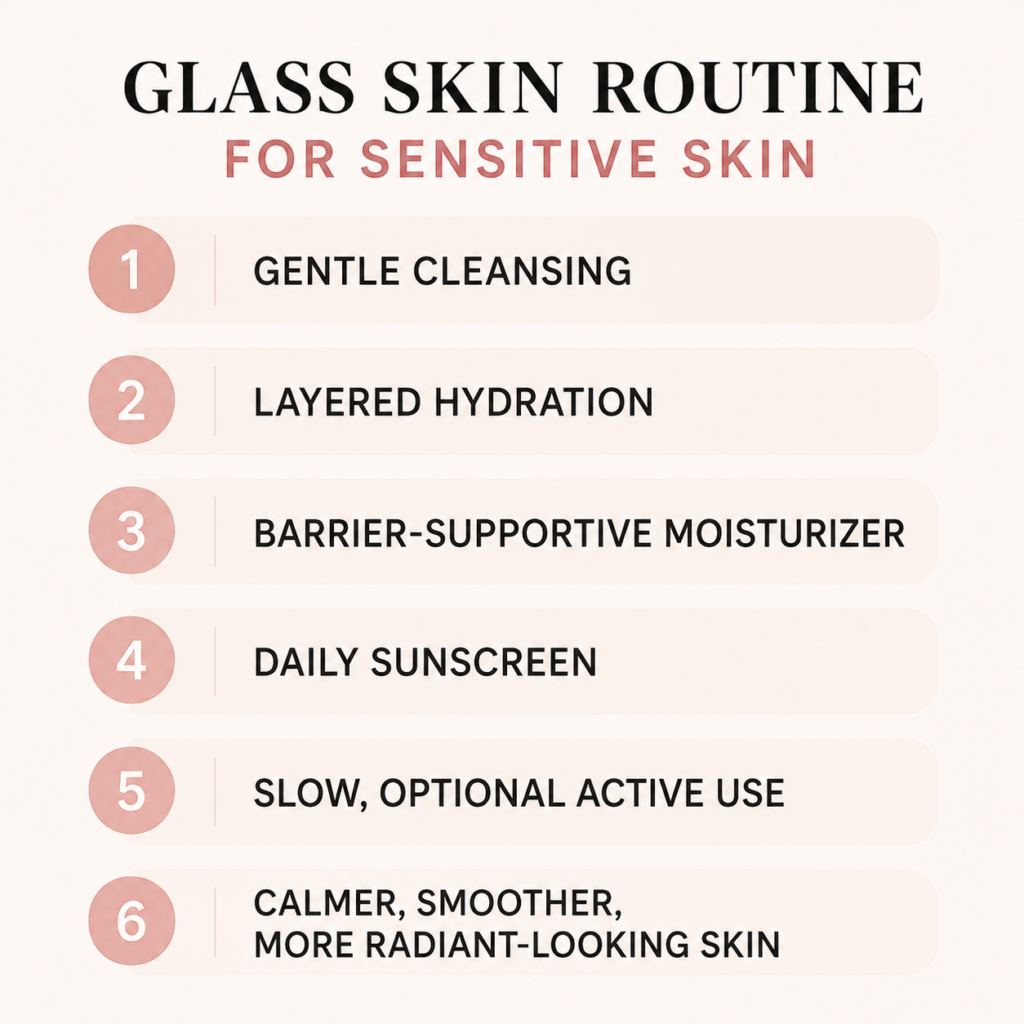
Step 1: Gentle Cleansing
Healthy glow starts with clean skin, not stripped skin.
Choose a gentle cleanser for sensitive skin that removes sunscreen, sweat, and buildup without leaving your face feeling tight.
If you wear SPF daily, a gentle double cleanse in the evening can help remove residue while keeping the skin barrier comfortable.
Korean skincare routines often prioritize gentle cleansing and low-pH formulas for exactly this reason. Dermatologists generally recommend mild, non-abrasive cleansing and advise stopping products that leave the skin irritated or excessively dry.
If you already read my article about Gentle Cleansing for Sensitive Skin, this is the same foundation.
Step 2: Layer Lightweight Hydration
Glass skin is built through hydration. Not oil, not shine, hydration. This is where Korean skincare excels.
If your skin often feels tight by the afternoon or looks dull no matter how much moisturizer you apply, dehydration could be part of the picture. That was one of the biggest clues for me.
Hydrating Ingredients for a Sensitive-Skin Glass Skin Routine:
| Ingredient | Main role | Sensitive-skin note |
| Glycerin | Draws water into the outer skin layers | Widely used and generally well tolerated |
| Hyaluronic acid | Helps improve surface hydration and plumpness | Follow with moisturizer to reduce moisture loss |
| Panthenol | Humectant and soothing support | Useful in simple barrier-focused formulas |
| Ectoin | Supports hydration and environmental-stress defense | Choose uncomplicated formulas |
| Centella asiatica | Commonly used for soothing support | Plant extracts can still cause individual reactions |
| Rice extract | Often used in brightening and hydrating Korean formulas | Benefits depend on the complete formulation |
| Niacinamide | Can support tone, oil balance, and barrier function | Sensitive skin may prefer lower concentrations |
These ingredients help support moisture retention while keeping the skin calm and comfortable. This combination has clinical backing: a pilot study on people with dry, eczema-prone skin found that a formula combining hyaluronic acid with hydrolyzed collagen significantly improved hydration, reduced water loss, and restored barrier function within just four weeks – PMC pilot study.
In my own routine, I start layering hydration immediately after cleansing with a Korean hydrating toner. It helps my skin feel more comfortable and prepared for the serum and moisturizer steps that follow.
This is the Korean hydrating toner I personally use and keep coming back to in my routine →
Step 3: Focus on Barrier Support
If your skin often feels reactive, this may be the most important step.
Does your skin seem to react to products that used to be completely fine? One day it’s comfortable, the next day everything stings?
That unpredictability is often your skin asking for support rather than stronger treatments.
A strong skin barrier helps:
- hold hydration longer
- reduce irritation
- improve skin texture
- support natural glow
- increase tolerance to active ingredients
Barrier-supportive ingredients such as ectoin, ceramides, panthenol, and centella can make a bigger difference than another brightening serum when your skin feels stressed.
If your skin often feels dehydrated, reactive, or less tolerant of active ingredients, ectoin may be one of the most supportive ingredients you can add to your routine. You can read more about my experience in Why Ectoin Became My Favorite Barrier-Support Ingredient →
I noticed a real difference after about four weeks of consistent barrier support. My skin stopped reacting to everything. It felt more comfortable, more predictable, and the texture became noticeably smoother without adding a single new active.
Step 4: Use Active Ingredients Slowly
Many glass skin routines include ingredients such as:
- retinol
- niacinamide
- vitamin C
- gentle exfoliants
These ingredients can absolutely support smoother, brighter skin, but sensitive skin usually benefits from introducing them gradually.
If you use retinol, start slowly. If you exfoliate, do less than you think you need.
Consistency almost always beats intensity.
I know it’s tempting to speed things up. We’ve all wondered if using a little more will get results faster, but sensitive skin usually rewards patience.
Optional Weekly Step: Hydrating Sheet Mask
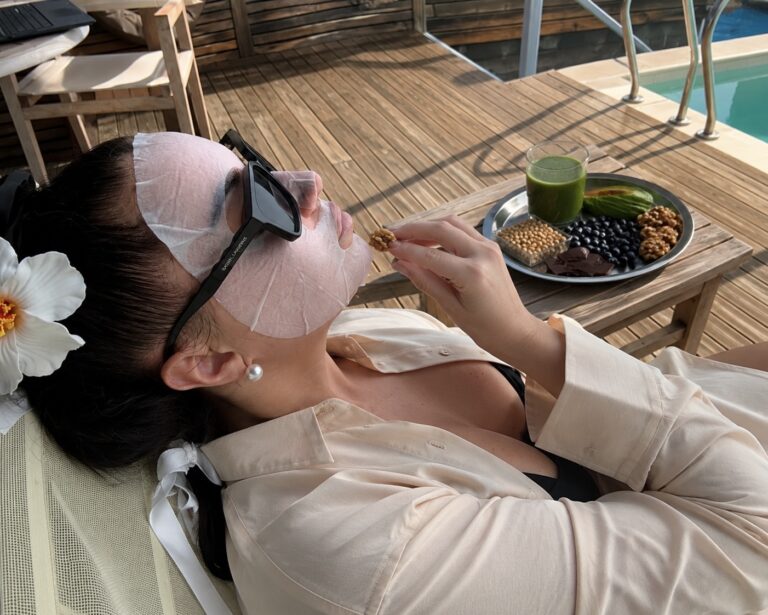
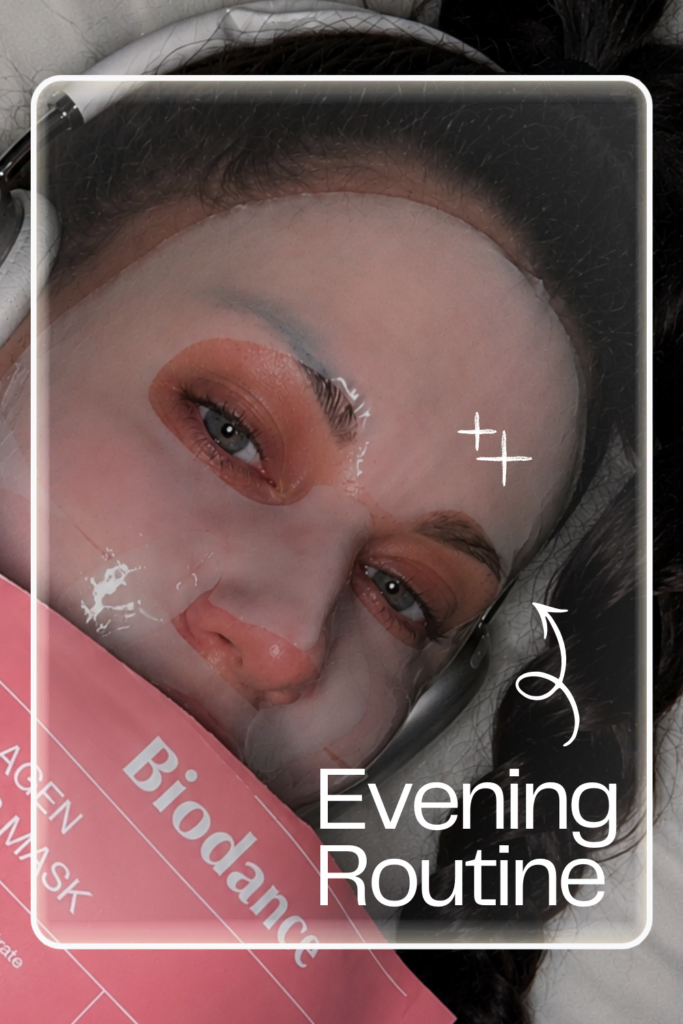
While not essential, I sometimes add a hydrating sheet mask once or twice a week when my skin feels dehydrated, stressed, or needs extra support.
One of my personal favorites is the Biodance collagen mask. I like using it in the evening as a simple hydration boost, especially during periods when my skin feels less comfortable or more reactive than usual.
A sheet mask will not create glass skin on its own, but it can be a helpful addition to a routine already focused on hydration, barrier support, and consistency.
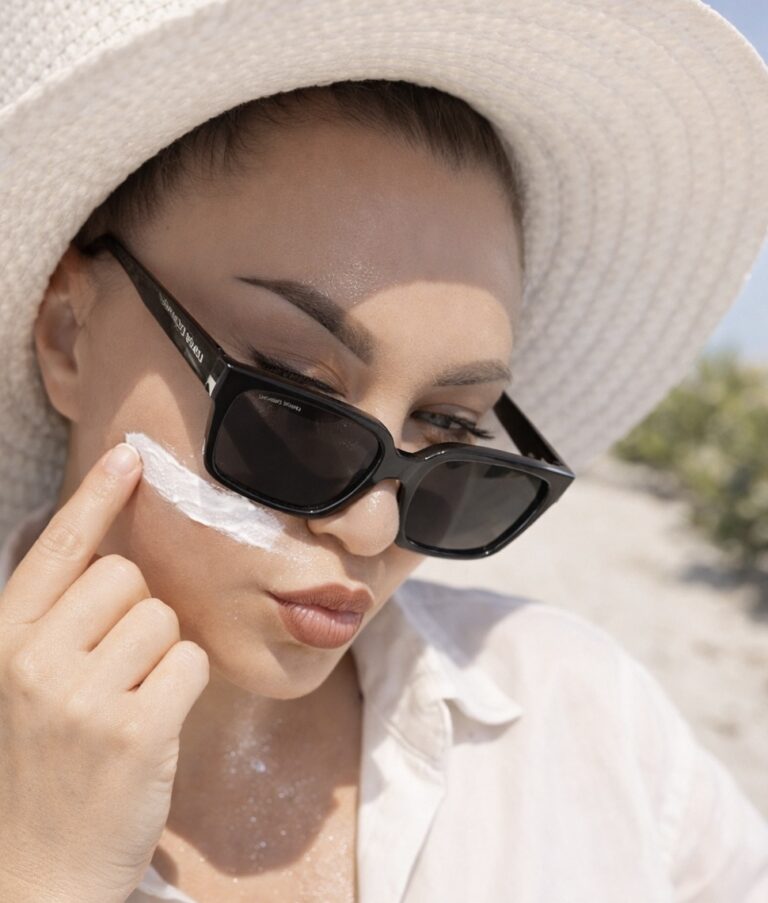
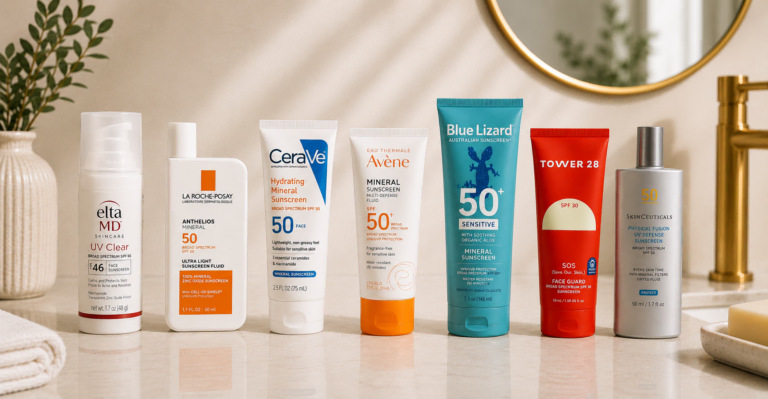
Step 5: Never Skip Sunscreen
You cannot build glass skin while ignoring UV damage.
Daily broad-spectrum sunscreen helps protect:
- collagen
- skin barrier function
- hydration levels
- skin tone
- long-term glow
Even the best routine struggles to deliver lasting results if your skin is constantly exposed to preventable UV damage.
How Long Does It Take to See a Healthier, More Hydrated Glow?
| Time frame | What you may notice |
| First few days | Skin may feel more comfortable after simplifying irritating steps |
| 2-4 weeks | More stable hydration and less day-to-day tightness |
| 4-8 weeks | Smoother-looking texture and a more consistent glow |
| 8-12+ weeks | More noticeable improvement in tone and routine tolerance |
| Ongoing | Results depend on consistency, UV protection, products, and underlying skin conditions |
What Changed My Skin the Most
Surprisingly, it was not a serum. Not a treatment, not a trend.
It was learning to stop interrupting my skin. For me, that shift happened around week six of simplifying my routine. I had dropped everything down to a gentle cleanser, one hydrating serum, and SPF. My skin felt calm for the first time in months. That calm was the beginning of the glow.
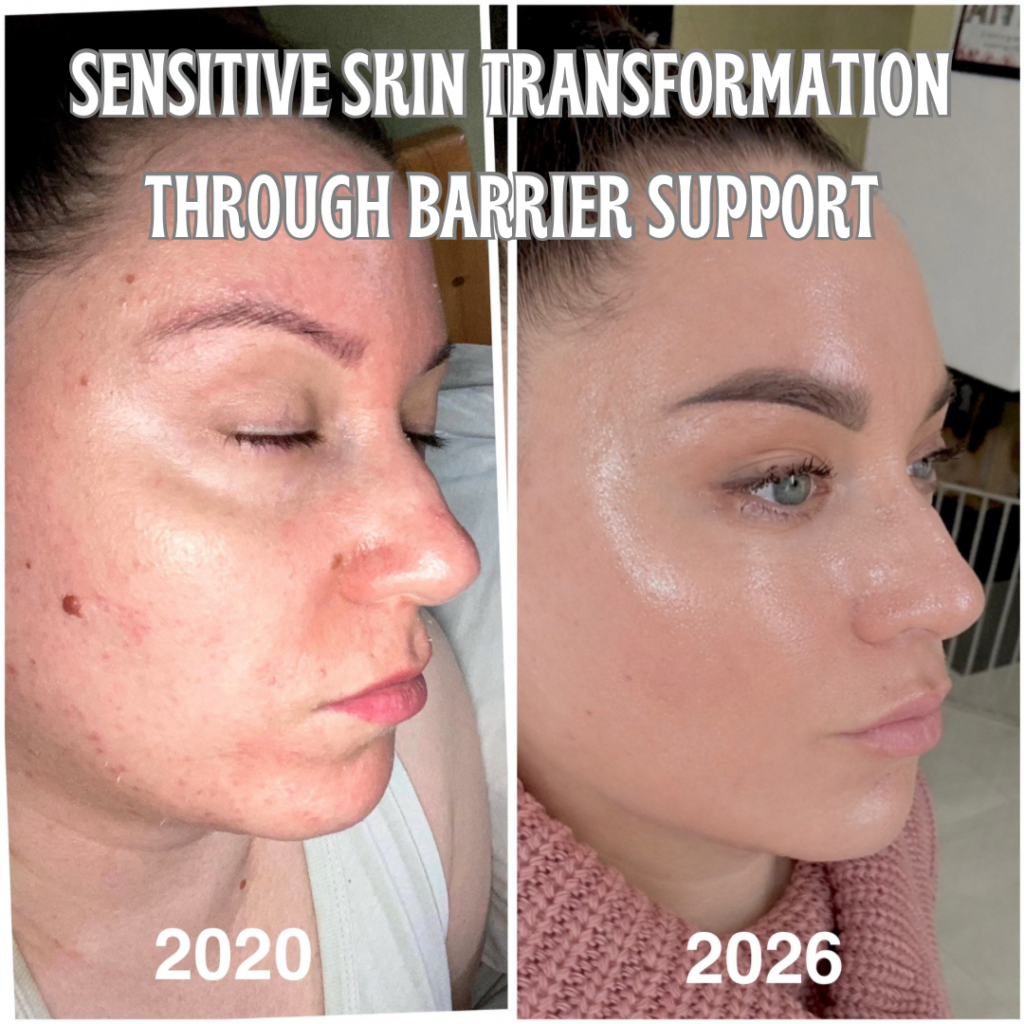
Less product switching, less over-exfoliation, less chasing instant results, more hydration, more barrier support, more consistency, the glow arrived gradually, but it also stayed.
And for sensitive skin, that matters far more than temporary results.
Common Glass Skin Mistakes to Avoid
- Adding several products in the same week
- Using strong exfoliants to create instant shine
- Applying too many humectant layers without moisturizer
- Continuing a product that burns or stings
- Using retinol, acids, and strong vitamin C too frequently
- Skipping sunscreen
- Assuming every Korean skincare product is automatically suitable for sensitive skin
- Treating persistent rosacea, eczema, or dermatitis as a cosmetic hydration problem
Frequently Asked Questions
Can sensitive skin achieve glass skin?
Yes. In fact, many people with sensitive skin see the best results when they focus on hydration, barrier repair, and gentle routines rather than aggressive treatments. Glass skin is about healthy skin function, not excessive exfoliation.
How long does it take to get glass skin?
Most people notice improvements in hydration and comfort within a few weeks. Visible changes in texture, tone, and overall glow often become noticeable after 6–12 weeks of consistent skincare.
What ingredients are best for glass skin?
Some of the most popular glass skin ingredients include: hyaluronic acid, ectoin, ceramides, centella asiatica, rice extract, niacinamide, snail mucin. The best ingredient is the one your skin can tolerate consistently. This is consistent with how dermatology literature describes the skin barrier — often called the ‘bricks and mortar’ model — where hyaluronic acid supports hydration and wound healing, while intercellular lipids like ceramides form the structural ‘mortar’ that prevents water loss – Clinical Medicine & Research review.
Can I do a glass skin routine if my skin barrier is damaged?
Yes, and it may be the most important time to try.
When your barrier is compromised, the priority is hydration and repair, not brightening actives. Focus on gentle cleansing, ectoin or ceramide-based hydration, and SPF. Most people see noticeable improvement in comfort and texture within two to four weeks.
Is a 10-step Korean skincare routine necessary?
No. Many dermatologists and Korean skincare experts now emphasize a more simplified approach focused on hydration, barrier support, and consistency rather than following every traditional step.
Can glass skin products cause breakouts?
Yes. Heavy layering, rich occlusives, fragranced formulas, or introducing several products together may contribute to congestion or irritation in some people. Introduce one product at a time and choose textures suited to your skin type.
Is snail mucin necessary for glass skin?
No. Snail mucin is optional. Hydration and barrier support can also come from glycerin, hyaluronic acid, panthenol, ectoin, ceramides, and other well-tolerated ingredients.
Can I use vitamin C if I have sensitive skin?
Possibly, but formulation and concentration matter. Start infrequently, patch test, and stop if you develop persistent burning or redness. A vitamin C product is not required for glass skin.
How many products do I need for glass skin?
Many people can build an effective routine with three or four core products: a gentle cleanser, moisturizer, sunscreen, and one optional hydrating product.
What should I stop first if my routine starts burning?
Pause exfoliating acids, retinoids, strong vitamin C, scrubs, and newly introduced products. Return to gentle cleansing, moisturizer, and sunscreen. Seek medical advice if irritation is severe or persistent.
Final Thoughts
If you have sensitive skin, glass skin does not require a complicated routine, it usually comes from the opposite approach.
A gentle cleanser, consistent hydration, barrier-support ingredients, daily sunscreen, and enough patience to let your skin respond.
If your current routine feels overwhelming, start by simplifying instead of adding more.
More often, it appears when you finally start doing only what your skin actually needs.
Not sure where to start?
At the end of this article, feel free to leave a comment and tell me a little about your skin—what you’re struggling with, what you’ve already tried, or what feels overwhelming right now. I read every comment and, while I can’t promise an immediate reply every time, I’ll always do my best to help.
If you want to start with barrier support, my article on ectoin explains why it became the first ingredient I reach for when my skin feels overwhelmed.
This article is intended for educational and informational purposes only and does not replace personalized medical advice, diagnosis, or treatment. If you experience persistent burning, swelling, rash, worsening redness, eczema, rosacea, or another skin condition, consult a board-certified dermatologist or qualified healthcare professional before introducing new products or active ingredients. Some links in this article may be affiliate links. I only share products I personally use, trust, or believe may be helpful to my readers.