Retinol for Sensitive Skin — A Gentle Beginner Routine
Have you ever wanted to try retinol, only to end up scared away by stories about peeling, burning, and damaged skin barriers?
I completely understand. Sensitive skin often needs a different approach than the one most retinol advice is built around. Most advice around retinol focuses on peeling, purging, irritation, and “pushing through” the adjustment phase — especially for sensitive skin.
Sensitive skin usually responds far better to retinol when the focus is on barrier support, slow introduction, and consistency instead of intensity. This is not about overnight transformation — it’s about introducing retinol in a way that keeps your skin calm, supported, and sustainable long term.
Why Retinol Can Support Skin Longevity
Retinol works best when the goal is long-term skin support — not chasing aggressive overnight results.
Retinol for Sensitive Skin at a Glance
| Question | Quick answer |
| Can sensitive skin use retinol? | Yes, with slow introduction. |
| How often should beginners start? | Once a week. |
| Should I use moisturizer? | Yes, before and after if needed. |
| Is sunscreen necessary? | Every morning. |
| Biggest mistake? | Increasing frequency too quickly. |
Is retinol worth it for sensitive skin?
Retinol can support smoother texture, more even-looking skin, and long-term collagen support. The key is introducing it slowly enough that your skin can adapt without becoming overwhelmed.
Clinical guidance from the American Academy of Dermatology also recommends introducing retinoids gradually and using moisturizer to help reduce irritation in sensitive skin.
A gentle retinol routine used consistently is usually far more effective than starting too aggressively and overwhelming your skin barrier.
What Retinol Actually Does for Your Skin
Retinol is a vitamin A derivative that increases skin cell turnover and supports collagen production over time. In practice, consistent use can lead to:
• Smoother overall skin texture
• Softer appearance of fine lines over months of use
• Clearer, less congested pores
• More even skin tone and reduced dullness
• Gradual improvement in skin firmness
Trying to speed up retinol results too quickly often leads to irritation, barrier damage, and stopping the routine entirely. Patience is not optional with retinol, it is the whole strategy.
How to Introduce Retinol Without Damaging Your Skin Barrier
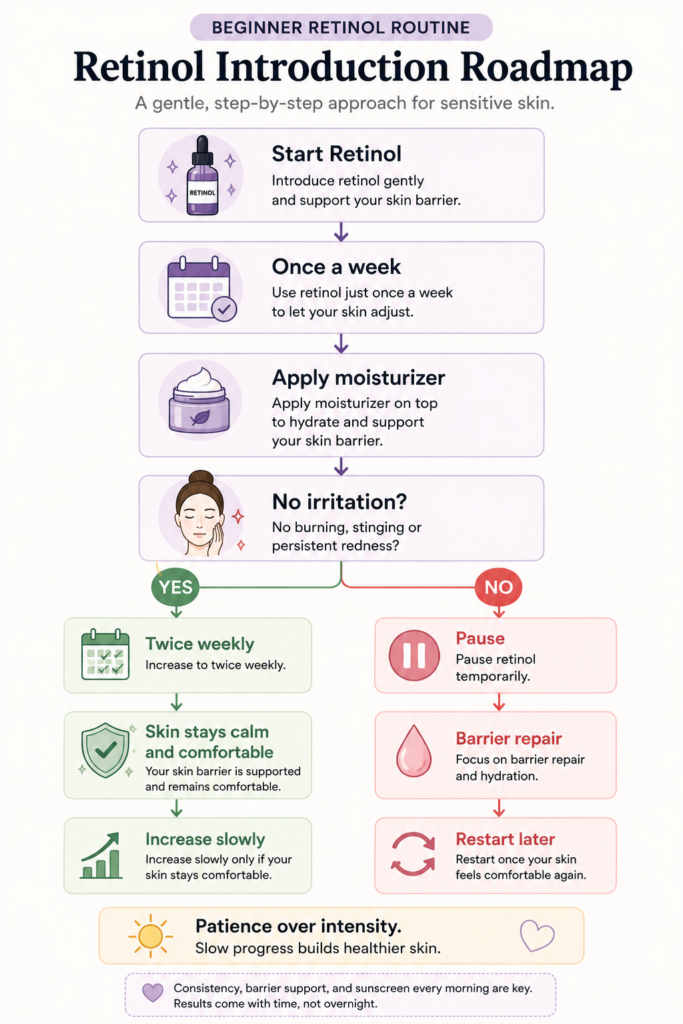
If you’re unsure how quickly to increase retinol, this simple roadmap shows the safest progression for sensitive skin.
Key Takeaway
Retinol doesn’t reward speed, but consistency.
Introducing it slowly while supporting your skin barrier is usually the most effective approach for sensitive skin.
I didn’t start strong. I did not use it every night. And I did not combine it with anything else active in those early weeks.
Weeks 1–2
• Once per week only
• A very small amount — less than you think you need
• Applied on fully dry skin after cleansing
• Moisturizer applied on top immediately after
Weeks 3–4
• Twice per week — same small amount
• Barrier cream layered on top instead of a regular moisturizer
Only increase retinol frequency once your skin shows no signs of irritation, tightness, burning, or barrier stress. No rushing. Skin is living tissue that responds to support far better than it responds to force. This pea-sized, alternate-night approach isn’t just a personal preference — a clinical review in the Journal of the American Academy of Dermatology specifically recommends starting sensitive skin on pea-sized applications every second or third night for the first one to two weeks.
If you’re also exfoliating with acids, keep them on separate nights from retinol — I break down exactly how to space this out for fall in my gentle fall exfoliation guide.
Is Your Skin Ready for Retinol?
If you’re planning to start retinol, your skin barrier matters just as much as the retinol itself. Use this calculator to find a gentle starting schedule based on your skin.
Retinol Starter Calculator
Answer a few quick questions to find a gentle beginner retinol schedule based on your skin sensitivity, barrier comfort, current routine, and previous retinol experience.
Do you find yourself wanting to increase frequency because your skin seems “fine”?
That temptation is incredibly common.
One of the biggest mistakes beginners make is increasing retinol too quickly before the skin has fully adapted.
Barrier-supportive ingredients like ectoin can help sensitive skin stay calmer and more resilient while adjusting to retinol.
Protecting the skin barrier is one of the most important ways to improve skin comfort during active skincare routines. Cleveland Clinic – Skin Barrier
This is the gentle retinol I personally use and recommend for beginners →
The Retinol Sandwich Method for Sensitive Skin
The retinol sandwich method can help reduce dryness and irritation significantly during the adjustment phase.:
Moisturizer → Retinol → Moisturizer
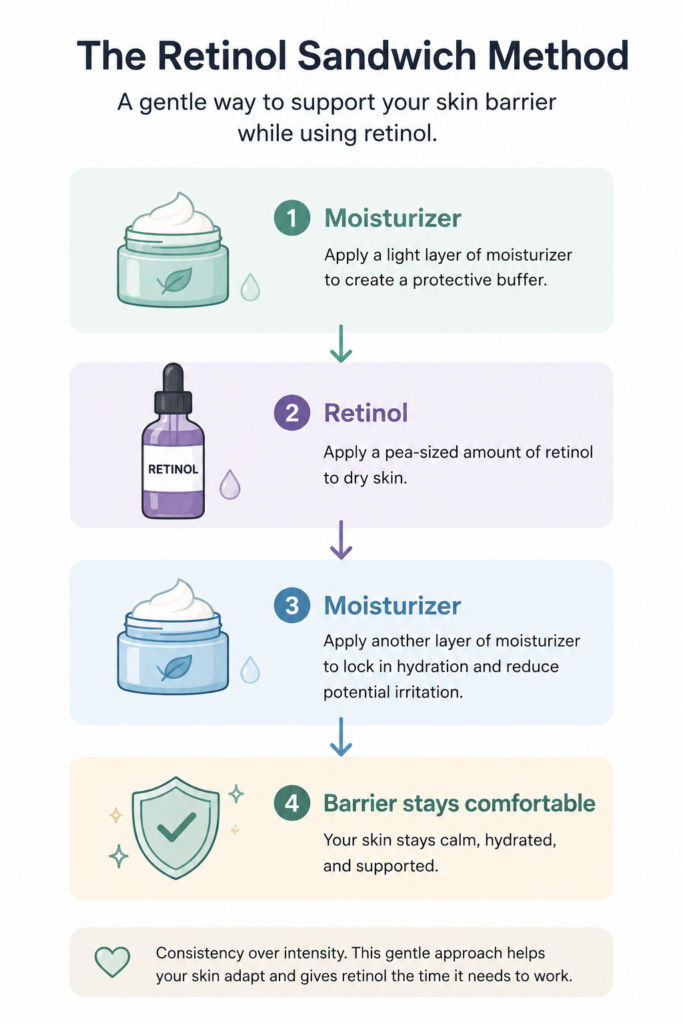
This buffering approach now has direct scientific backing: a 2025 ex vivo study presented at the AAD found that layering a moisturizer with retinol preserved its bioactivity at the gene-expression level, confirming the sandwich method doesn’t cancel out retinol’s benefits – Westlake Dermatology summary of AAD 2025 study.
Should I apply retinol before or after moisturizer?
For sensitive skin, applying moisturizer before and after retinol often makes the adjustment phase much easier.
What to Avoid When Starting Retinol
Keeping the rest of your routine simple is one of the best ways to reduce irritation while starting retinol. I avoided:
| Avoid when starting retinol | Why |
| Strong acids | Higher irritation risk |
| Scrubs | Barrier damage |
| High-strength Vitamin C | Too many actives |
| Daily exfoliation | Delays adaptation |
Can I use exfoliants and retinol together?
Beginners usually do better when exfoliating acids and retinol are introduced separately.
Combining too many active ingredients too quickly increases the risk of irritation and barrier stress.
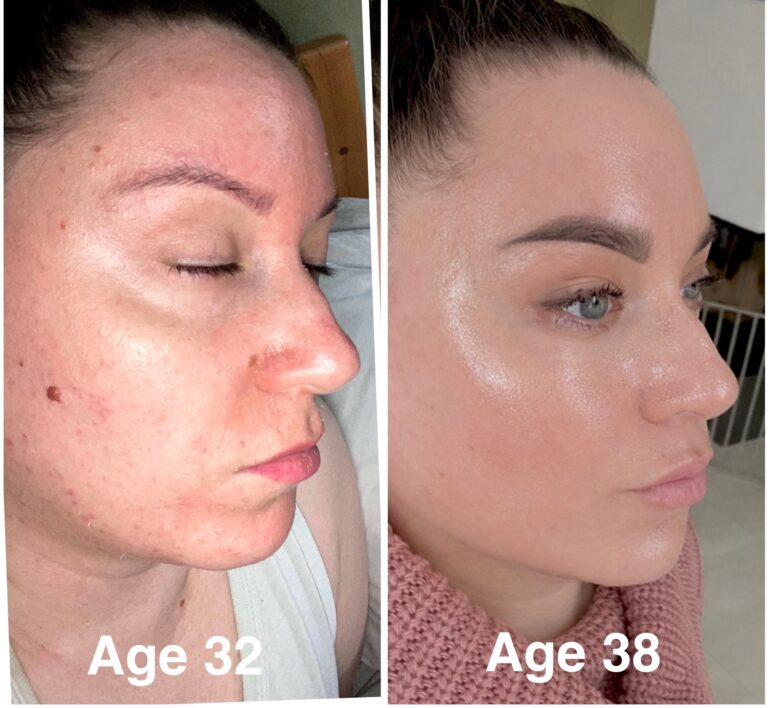
What Realistic Retinol Results Actually Look Like
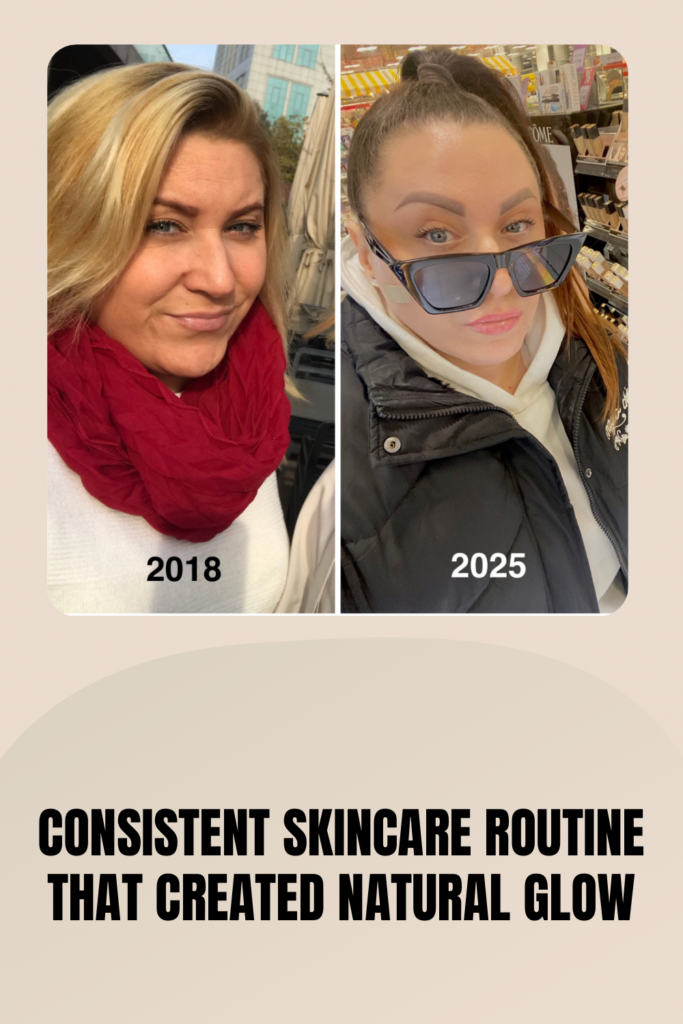
The first retinol improvements are usually subtle and texture-related rather than dramatic overnight changes:
• A smoother feel when cleansing in the morning
• A more refined look in natural light
• Makeup sitting more evenly on the skin
• Pores looking less congested overall
What I did not notice: instant glow, dramatic wrinkle change, or overnight transformation. And that is completely normal.
What does realistic retinol progress look like?
Real progress is often subtle at first.
Most people notice smoother texture, less congestion, and a more refined overall appearance long before dramatic changes become visible.
Retinol is a long-game ingredient, he results are real — but they arrive gradually, not all at once.
Retinol is that works especially well alongside calming routines like ice water therapy.
Signs Your Skin Barrier Needs a Retinol Break
When should you stop using retinol temporarily?
Temporary dryness is common.
Persistent burning, significant redness, worsening irritation, or discomfort that lasts throughout the day are signs that your skin may need a break.
Recognizing barrier stress early is one of the most important parts of using retinol safely. I think it is one of the most important things to know before you start. Retinol-induced irritation — redness, stinging, and flaking — is well documented in clinical research; a randomized, vehicle-controlled patch-test study confirmed this pattern and tested which soothing ingredients most effectively reduce it, reinforcing why barrier support matters just as much as the retinol itself – PMC/NIH clinical study.
| Your skin feels… | What to do |
| Mild dryness | Continue slowly |
| Burning | Pause retinol |
| Persistent redness | Barrier repair |
| Stinging | Reduce frequency |
| Peeling + pain | Stop temporarily |
If you’re unsure whether your skin is dehydrated or your skin barrier is compromised, the free Skin Barrier Quiz can help you understand what your skin may need.
Some mild dryness or flaking in the first two weeks is normal. But adjustment should feel manageable — not painful. If your skin is sending clear distress signals, it is always right to slow down.
Who May Benefit Most from a Gentle Retinol Routine?
| This approach may help if you… | You may want to wait if… |
| Have sensitive skin | Are pregnant or breastfeeding |
| Are new to retinol | Have an active rosacea flare |
| Want smoother skin over time | Have a damaged skin barrier |
| Prefer a slow routine | Use prescription retinoids |
| Focus on skin longevity | Recently had aggressive treatments |
Why Retinol and Sunscreen Always Go Together
Do I really need sunscreen if I use retinol?
Yes. Retinol increases sensitivity to UV exposure, making daily sunscreen one of the most important parts of a successful retinol routine.
Without daily SPF, you are actively undoing the progress retinol is building.
Daily SPF 50 protection is one of the most important parts of a healthy retinol routine.
Daily sun protection helps preserve the benefits of retinol while reducing UV-related skin damage. Skin Cancer Foundation
| Evening | Morning |
| Retinol | SPF 50 |
| Barrier cream | Reapply SPF |
| Sleep | Protect collagen |
Retinol without sunscreen is not a routine — it’s a mistake.
When You Should Avoid Starting Retinol Alone
This is worth saying clearly.
| Retinol may not be suitable if… | Better approach |
| Pregnancy | Ask your doctor |
| Active rosacea flare | Barrier repair first |
| Damaged barrier | Heal first |
| Prescription retinoids | Dermatologist guidance |
Stronger is not better. Appropriate is better. And for some skin conditions and circumstances, retinol is simply not the right next step.
What Retinol Can Realistically Support Over Time
Retinol works best as one supportive part of a balanced skincare routine — not as a miracle solution.
But it supported:
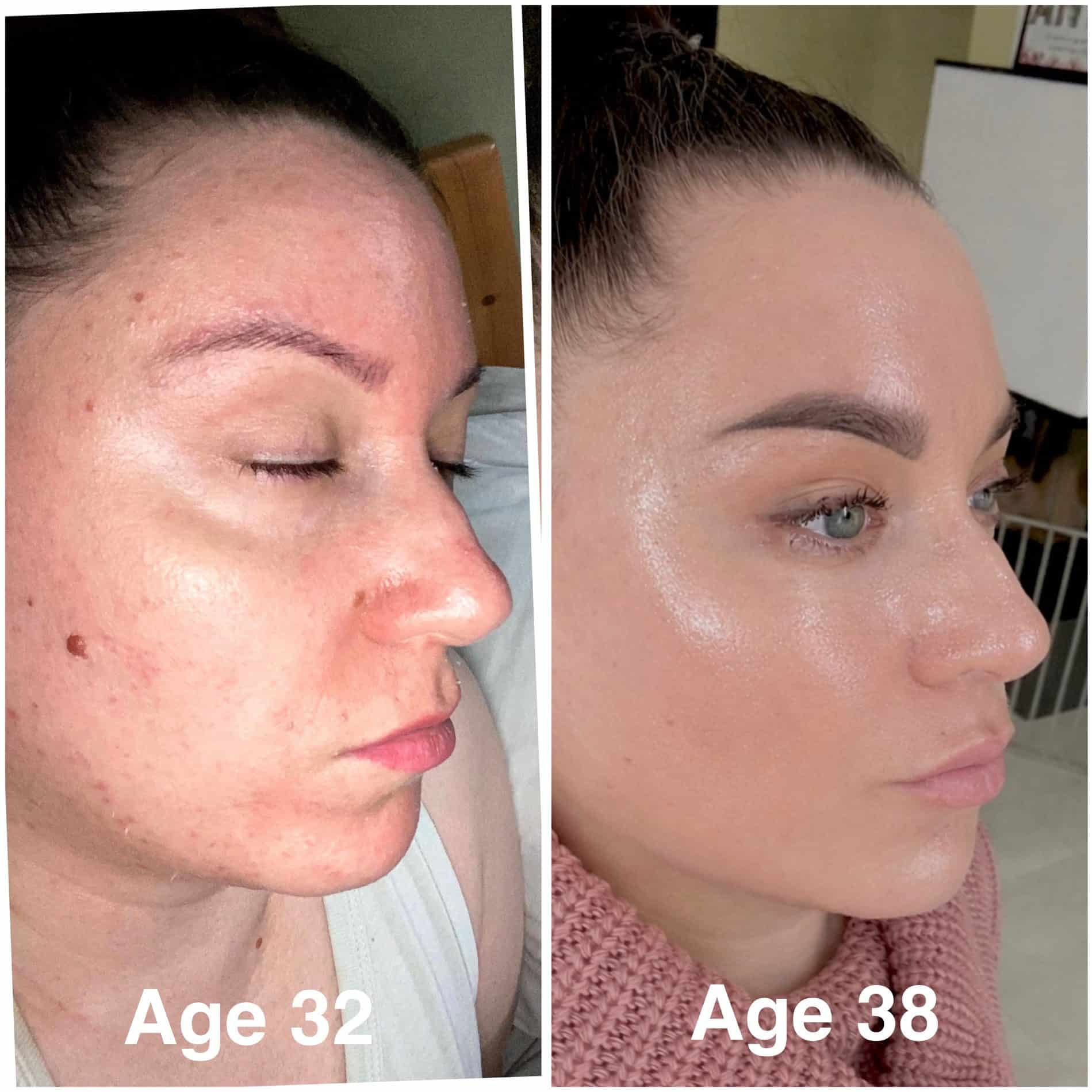
• smoother texture
• more even look
• better long-term maintenance
• calmer product decisions
It became part of my routine — not the center of it.
Long-term skin improvement usually comes from consistency, balance, and barrier support — not from one “hero” ingredient alone.
Many people with sensitive skin assume retinol automatically means irritation, peeling, or barrier damage.
In reality, a slower and gentler approach often changes the experience completely.
What Realistic Retinol Progress Looks Like
| Timeline | What you may notice |
| Weeks 1-2 | Skin adapts |
| Weeks 3-4 | Less dryness |
| Weeks 6-8 | Smoother texture |
| Months 3-6 | More even tone |
| Months 6+ | Long-term collagen support |
Frequently Asked Questions
How often should a beginner use retinol?
Once a week for the first two weeks is the safest starting point. From there, increase gradually — twice a week in weeks three and four, and then three times a week only once your skin has shown it can tolerate that without stress. There is no benefit to rushing this process, and a lot of potential irritation if you do. This gradual timeline aligns closely with dermatologist-authored guidance, which recommends starting twice weekly for the first two weeks, then increasing to every other night by weeks three and four.
Can I use retinol if I have sensitive skin?
Yes, but with extra caution. Start with a very low concentration — 0.025% or 0.05% — and use the retinol sandwich method to buffer the application. Sensitive skin can absolutely adapt to retinol over time, but it needs a slower introduction and more consistent barrier support throughout.
How long before I see results from retinol?
Most people notice texture improvements within six to eight weeks of consistent use. More significant changes — in tone, pore appearance, and fine lines — typically become visible between three and six months. This is why consistency matters so much more than starting strong.
Can retinol damage the skin barrier?
Retinol can contribute to barrier irritation when introduced too quickly or used too frequently. A slow, gradual approach helps reduce this risk.
What does retinol purging look like?
Purging often appears as small breakouts in areas where you commonly experience congestion. It is different from widespread irritation, burning, or redness.
Should I use retinol every night?
Not necessarily. Many people with sensitive skin achieve excellent results using retinol two to four times per week.
Should I stop retinol if my skin starts peeling?
Mild dryness can be normal, but persistent irritation, burning, or excessive peeling are signs that it may be time to reduce frequency or take a short break.
Is retinol worth it for sensitive skin?
For many people, yes. When introduced slowly and paired with good barrier support, retinol can be one of the most effective long-term skincare ingredients available.
Can I use retinol with PDRN?
Generally, yes — but not stacked directly on top of each other every night. The safest approach is either alternating nights or applying PDRN first and letting it fully absorb before retinol, since PDRN’s barrier-supporting properties can help offset some of retinol’s irritation. Cleveland Clinic notes that retinol alone can irritate skin and recommends starting slowly, a few times a week before daily use, so if you’re combining it with PDRN too, ease in gradually. Read more about the mechanism of PDRN.
Quick Summary
| Remember | Why it matters |
| Start once weekly | Less irritation |
| Moisturize well | Supports the barrier |
| Wear SPF daily | Protects new skin |
| Increase slowly | Better long-term results |
| Stay consistent | Results come with time |
Final Thought
Retinol works best when expectations stay realistic and the focus stays on long-term skin support. Slow start. Low dose. Barrier support, sunscreen every morning, and the patience to measure results in months, not weeks.
Consistency over intensity.
Healthy skin routines support your skin consistently instead of forcing faster results before your barrier is ready.
Thinking about starting retinol, or already trying it?
I’d love to hear where you are in your skincare journey.
Are you worried about irritation? Unsure how often to use it? Trying to figure out whether your skin is adjusting normally?
Leave a comment below and let me know. I read every comment and I’ll always do my best to help.
This article may contain affiliate links. I only share products I personally use or trust.