10 Best Foods for Glowing Skin (Backed by Science)
You are doing everything right. You buy the expensive serums, you never skip your moisturizer, and you strictly follow a 5-step skincare routine. Yet, you wake up, look in the mirror, and your skin still looks tired, dry, or dull.
Your skin completely regenerates itself every 28 to 40 days, and it builds those brand-new cells directly from the nutrients you consume. That realization completely changed how I think about skincare. Instead of focusing only on what I put on my skin, I also started paying much more attention to what I put on my plate. Simple habits—like eating more blueberries, leafy greens, salmon, and walnuts—gradually became part of my routine, and over time I noticed that my skin looked calmer, healthier, and more comfortable.
Modern dermatology has proven the existence of the Gut-Skin Axis—a direct biochemical link between your digestive health and the radiance of your complexion. If your diet causes internal inflammation, no amount of expensive cream can mask it. If you want a radiant, youthful complexion, you need to feed your skin from within. Let’s look at the 10 best, science-backed foods to transform your skin from dull to glowing.
What you eat cannot replace a good skincare routine—but it can support your skin barrier, collagen production, and recovery in ways topical products simply cannot. If you’re unsure whether you’re dealing with dehydrated skin or a damaged skin barrier, my free Skin Barrier Quiz can help you understand what your skin may need before changing your routine.
How Food Supports Glowing Skin
| What You Eat | What It Supports |
| Omega-3 fats | Skin barrier and hydration |
| Vitamin C | Collagen production |
| Antioxidants | Protection from oxidative stress |
| Healthy fats | Moisture retention |
| Colorful plants | Skin tone and long-term skin health |
1. Fatty Fish (Salmon, Mackerel, Herring)
Fatty fish are unparalleled sources of omega-3 fatty acids, which are essential for maintaining skin health. The Science: According to the National Institutes of Health (NIH), omega-3 fatty acids keep skin thick, supple, and hydrated. A deficiency in omega-3s can cause severe dry skin and barrier disruption. Fatty fish also contain zinc, a mineral that regulates inflammation and skin cell production. Clinical studies show that zinc supports cellular turnover internally, acting similarly to a biological retinol.
High omega-3 content reduces acne and inflammatory skin conditions.
2. Avocados
Avocados are rich in healthy fats and vitamins that promote cellular repair. The Science: A study published by the Cleveland Clinic highlights that the monounsaturated fats in avocados improve skin elasticity and reduce the appearance of wrinkles. They are packed with Vitamin E, a key lipid-soluble antioxidant that protects your skin from oxidative damage.
Provides lipid barrier support to lock in skin moisture from within.
3. Walnuts
Walnuts provide a perfect balance of essential fatty acids that the human body cannot produce on its own. The Science: Research from Harvard T.H. Chan School of Public Health shows walnuts are richer than most other nuts in both omega-3 and omega-6 fatty acids, reducing skin inflammation. They also deliver small amounts of zinc, which acts as a barrier protector against pathogens.
Optimal omega-3 to omega-6 ratio effectively fights skin inflammation.
4. Sweet Potatoes
Sweet potatoes are an excellent source of beta-carotene, which functions as a natural sunblock. The Science: As noted by the American Academy of Dermatology (AAD), carotenoids like beta-carotene are integrated into your skin to help protect skin cells from sun exposure. Clinical research demonstrates that regular beta-carotene consumption delivers a warm, healthy, slightly golden undertone to the human skin, which is naturally perceived as more attractive and radiant than a UV-induced tan. Acts as a natural pro-vitamin A source for cell turnover.
Vitamin A doesn’t only support your skin from the inside. It’s also one of the most researched ingredients in topical skincare. If you’d like to learn how retinol can help improve skin texture, support collagen, and promote healthy skin renewal, read my complete guide to retinol for beginners.
5. Red or Yellow Bell Peppers
Bell peppers are among the best dietary sources of vitamin C, outperforming many citrus fruits. The Science: The Oregon State University Linus Pauling Institute states that vitamin C is required to create collagen, the structural protein that keeps skin firm. A large observational study linked eating plenty of yellow and green vegetables to reduced skin wrinkling.
Essential co-factor for collagen synthesis and fading hyperpigmentation.
| Nutrient | Primary Benefit to Skin | Best Food Sources | Scientific Authority |
|---|---|---|---|
| Omega-3s | Reduces inflammation, locks in moisture | Salmon, Walnuts, Flaxseeds | NIH |
| Vitamin C | Boosts collagen production, helps reduce the appearance of dark spots | Bell Peppers, Broccoli, Citrus Fruits | Harvard Health |
| Beta-Carotene | Supports healthy skin and provides natural UV defense through vitamin A production | Sweet Potatoes, Carrots | American Academy of Dermatology (AAD) |
| Vitamin E | Helps protect skin cells from oxidative damage | Avocados, Almonds | Cleveland Clinic |
6. Blueberries
Blueberries are frequently called a superfood, and for good reason—they are packed with skin-saving antioxidants. The Science: According to Harvard Health Publishing, the anthocyanins that give blueberries their deep color protect the skin from premature aging by neutralizing free radicals. These nutrients also improve circulation, helping your blood deliver vital oxygen and nutrients to skin cells.
Blueberries are one of my favorite everyday snacks because they’re easy to keep at home and don’t require any preparation. When they’re in season, I almost always have them in the fridge.
Precursors to vascular health, ensuring efficient nutrient delivery to the dermis.
7. Spinach & Dark Leafy Greens
Spinach is packed with skin-loving nutrients like Vitamin A, Vitamin C, and iron, making it essential for a clear complexion. The Science: Clinical data hosted on PubMed Central (NIH) shows that the lutein and carotenoids in spinach protect skin from oxidative stress and maintain skin density. The high iron content ensures proper oxygenation of cells, eliminating that dreaded pale, tired look.
High lutein content improves overall skin hydration and elasticity.
One of My Favorite Ways to Eat More Greens

I usually blend spinach with blueberries, a handful of healthy fats like walnuts, and sometimes avocado. It isn’t about creating the “perfect” smoothie—it’s simply an easy way to eat several skin-supportive foods in one meal.
Smoothies can be especially helpful on busy mornings or after a workout when you want something quick, satisfying, and nutrient-dense. Just remember that whole foods should still make up most of your diet, since chewing whole fruits and vegetables can be more filling and often provides more fiber than heavily strained smoothies.
8. Tomatoes
Tomatoes are a major source of lycopene, a potent carotenoid. The Science: Clinical reviews tracked by the PubMed – Lycopene and photoprotection show that consuming lycopene-rich foods regularly protects the skin against sunburn and UV-induced photoaging. Pair tomatoes with a healthy fat like olive oil to dramatically increase your body’s lycopene absorption.
Lycopene bio-availability increases when cooked or paired with healthy lipids.
9. Green Tea
Green tea contains powerful compounds called catechins that work to improve your skin’s overall health. The Science: A study analyzed by PubMed EGCG skin review found that regular consumption of green tea can improve skin hydration, thickness, and elasticity. Avoid drinking your green tea with milk, as milk can reduce the effectiveness of its antioxidants. EGCG catechins inhibit collagen-degrading enzymes.
Green tea has slowly replaced one of my afternoon coffees, and it’s now one of those simple habits I actually enjoy keeping.
10. Dark Chocolate (70%+ Cocoa)
Cocoa contains antioxidants that significantly improve skin density and hydration. The Science: Research published via European Food Safety Authorities confirms that cocoa flavanols contribute to better blood circulation, delivering more nutrients to the skin. Participants in studies reported less skin roughness and better resistance to UV rays after regular cocoa intake.
Flavanols increase skin microcirculation and biological hydration levels.
The Ultimate Skin-Glow Meal Planner
To make this practical for you, here is how you can easily combine these foods into your weekly routine:
| Meal Type | Perfect Glow Combination | Skin-Support Benefit |
|---|---|---|
| Breakfast | Green tea + oatmeal with walnuts and blueberries | Provides antioxidants, fiber, and healthy fats that help support overall skin health. |
| Lunch | Spinach salad with tomatoes, bell peppers, and avocado | Combines vitamins C and E with carotenoids to support collagen formation and antioxidant protection. |
| Dinner | Grilled salmon with broccoli and roasted sweet potatoes | Delivers omega-3s, beta-carotene, and vitamin C to help support the skin barrier and protect against oxidative stress. |
| Snack | 70%+ dark chocolate | Cocoa flavanols may support healthy skin circulation and hydration when enjoyed in moderation. |
Key Takeaways
✅ Feed your skin before you treat it.
✅ Eat antioxidant-rich foods every day.
✅ Healthy fats help support your skin barrier.
✅ Vitamin C supports collagen production.
✅ Consistency matters more than perfection.
You Don’t Need to Eat Everything Every Day
Don’t worry about creating the perfect diet overnight. Focus on adding one or two skin-supportive foods consistently each week. Small changes repeated over time almost always outperform short-term perfection.
Frequently Asked Question
What foods cause dull skin?
Foods high in refined sugars, high-fructose corn syrup, and processed carbohydrates cause rapid spikes in insulin. According to the American Academy of Dermatology (AAD), this process triggers inflammation and leads to glycation (where sugar molecules bind to and destroy collagen), leaving the skin looking dull and saggy.
How long does it take for diet to change your skin?
Because your skin’s top layer (the epidermis) takes roughly 28 to 40 days to fully cycle through new cells, you can expect to see noticeable improvements in skin tone, hydration, and clarity within 4 to 6 weeks of consistent dietary changes.
Can drinking water make your skin glow?
Water is necessary for overall cellular function and systemic toxin removal. However, systemic hydration must be paired with healthy essential fats (like those found in salmon and avocados) to effectively lock moisture into the skin barrier. Without healthy fats, the water you drink cannot stay in your cells.
What fruit gives the fastest skin glow?
Fruits high in Vitamin C and water content—like citrus fruits, strawberries, and papayas—provide the quickest glow. Vitamin C works fast as an antioxidant to improve blood flow, while brightening hyperpigmentation.
Does collagen from food actually reach the skin?
When you eat collagen-rich foods (like bone broth), your digestive system breaks the collagen down into individual amino acids. Your body then uses these amino acids as raw materials to build its own collagen where it is needed most—including your skin.
Can a bad diet cause hormonal acne?
Yes. Diets with a high glycemic index (sugar, dairy, white bread) raise insulin levels. High insulin triggers an overproduction of androgens (hormones) and sebum (oil), which clogs pores and directly causes hormonal flare-ups.
Is dairy bad for skin radiance?
Not for everyone. However, clinical studies indicate that conventional dairy products contain growth hormones that can overstimulate oil glands, leading to acne, redness, and a textured, dull complexion in sensitive individuals.
Which nut is best for skin whitening or brightening?
Walnuts and almonds are the best. Almonds are rich in Vitamin E, which repairs scarred tissues and lightens dark spots, while walnuts fight the inflammatory processes that lead to uneven skin tone.
What deficiency causes pale and dull skin?
An iron deficiency (anemia) is a major cause of pale, lifeless skin because it reduces oxygen delivery to tissues. A deficiency in Vitamin D or Vitamin B12 can also impair cell regeneration, leading to a dull look.
Can green tea replace your moisturizer?
Absolutely not. While green tea provides internal polyphenols that fight inflammation and photoaging from within, you still need a topical moisturizer to seal your skin’s outer lipid barrier from external environmental pollutants.
Quick Summary: The Ultimate Glowing Skin Foods
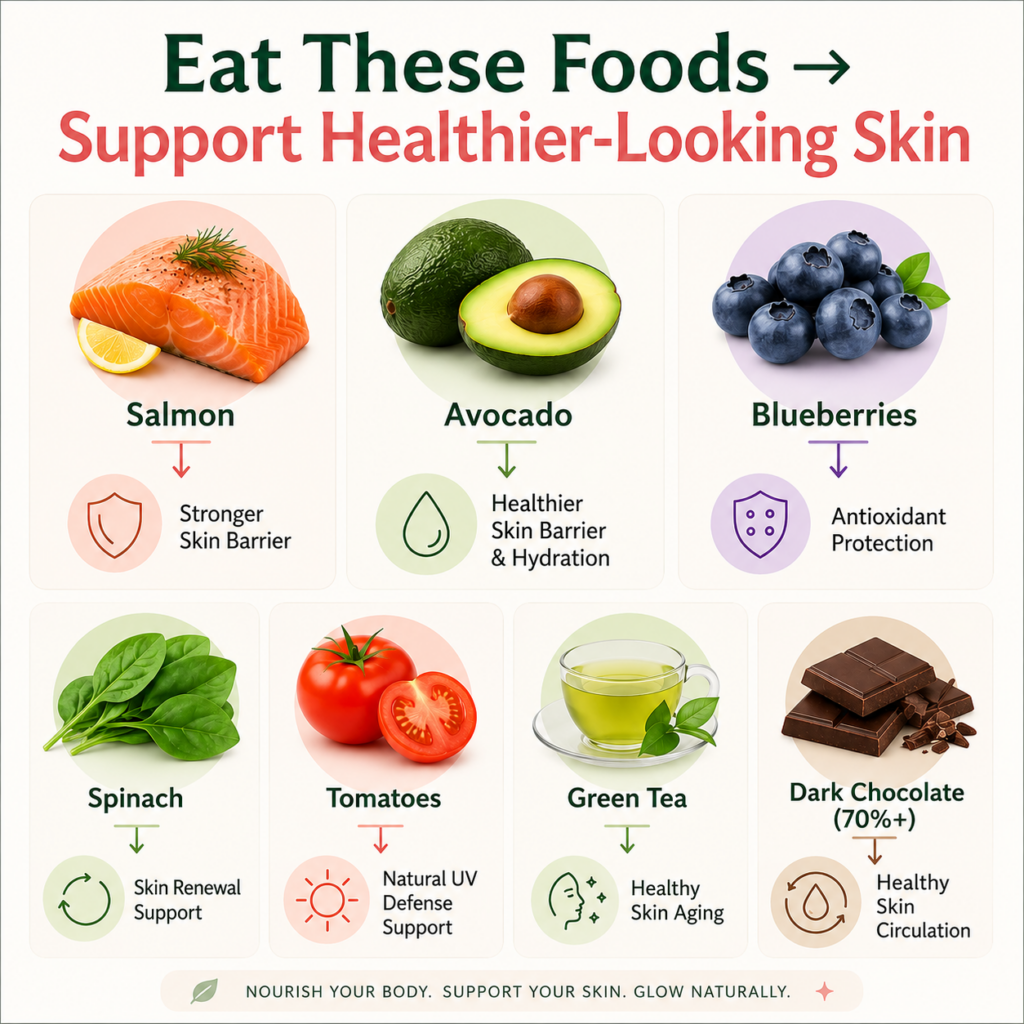
The best foods for glowing skin are rich in omega-3 fatty acids, vitamins C and E, zinc, selenium, and antioxidants like anthocyanins and lycopene. Top science-backed choices include fatty fish (salmon), avocados, walnuts, sweet potatoes, bell peppers, blueberries, spinach, tomatoes, green tea, and dark chocolate. These specific nutrients reduce systemic inflammation, accelerate collagen synthesis, support the lipid barrier, and protect against UV-induced photoaging.
| your goal is… | Focus on… |
| Brighter skin | Vitamin C + antioxidants |
| Better hydration | Omega-3 + healthy fats |
| Stronger barrier | Healthy fats + zinc |
| Healthy aging | Green tea + tomatoes + blueberries |
| Natural glow | Whole-food, nutrient-dense diet |
What This Means for Your Daily Routine
You don’t need expensive superfoods or complicated meal plans. Building meals around whole foods, healthy fats, colorful vegetables, berries, and omega-3-rich fish is often enough to support healthier-looking skin over time.
Final Thoughts
Healthy skin isn’t built overnight, and it isn’t built by skincare alone. Every meal is another opportunity to support your skin from within.
What food has made the biggest difference for your skin?
Have you noticed that certain foods make your skin look healthier—or perhaps trigger breakouts or dryness? I’d love to hear about your experience. Share it in the comments below. I read every comment whenever I can, and your story may help someone else, too.
Start with one small change this week, stay consistent, and give your skin time to respond. Over time, those simple habits often make a bigger difference than constantly chasing the next trending product.