Dehydrated Skin vs Damaged Skin Barrier: How to Tell the Difference
Have you ever looked in the mirror and wondered, “Why does my skin suddenly feel so uncomfortable?“
Maybe it feels tight after cleansing. Maybe it’s irritated by products you’ve used for years. Or maybe no amount of moisturizer seems to help.
If that sounds familiar, you’re not alone.
Many people assume they have dry skin. Others think their skin barrier is damaged.
Do you find yourself wondering whether you simply need more hydration—or whether you’ve damaged your skin barrier without realizing it?
I asked myself the same question more times than I can count.
The truth is that dehydrated skin and a damaged skin barrier can look very similar at first. Both can cause discomfort, sensitivity, redness, and a lack of glow, but they are not the same thing.
Understanding the difference can help you choose the right skincare approach instead of adding more products and hoping something works.
In this guide, I’ll explain how to tell the difference between dehydrated skin and a damaged skin barrier, what causes each condition, and what you can do to help your skin feel calm, comfortable, and healthy again.
If your skin often feels dehydrated, reactive, or easily irritated, learning how to support your skin barrier can make a bigger difference than adding another serum.
Not Sure Whether Your Skin Is Dehydrated or Your Skin Barrier Is Damaged?
Many of the symptoms can look surprisingly similar, which makes it difficult to know what your skin actually needs.
Take the 2-minute Skin Barrier Quiz to identify the most common signs of dehydration, skin barrier damage, or a combination of both.
Why does my skin suddenly feel tight, dry, and sensitive?
Tight, uncomfortable skin can be caused by dehydration, a damaged skin barrier, or both.
While the symptoms often overlap, understanding the difference can help you choose the right approach instead of adding more products and hoping something works.
What Is Dehydrated Skin?
Dehydrated skin is a skin condition caused by a lack of water.
Unlike dry skin, which is a skin type, dehydration can affect almost anyone — including people with oily, combination, or acne-prone skin.
According to the American Academy of Dermatology, dehydrated skin can make fine lines appear more noticeable and often leaves skin looking dull, uncomfortable, and less resilient than usual.
When your skin doesn’t hold enough water, it can begin to feel uncomfortable and look less healthy than usual.
Common Signs of Dehydrated Skin
– Tightness after cleansing
– Dull or tired-looking skin
– Fine dehydration lines
– Skin that feels rough but also oily
– Makeup that looks patchy
– Increased sensitivity
– Loss of natural glow
You may notice that your skin feels thirsty even when you’re using moisturizer regularly.
Can dehydrated skin be oily?
Yes. Dehydrated skin lacks water, not oil. Many people notice that their skin feels both oily and tight at the same time.
What Is a Damaged Skin Barrier?
Your skin barrier is the outermost protective layer of your skin.
Its job is to keep moisture in and help protect your skin from external stressors such as pollution, harsh skincare products, over-exfoliation, and environmental damage.
When the barrier becomes weakened, your skin may struggle to retain moisture and defend itself properly.
Common Signs of a Damaged Skin Barrier
– Stinging when applying skincare
– Burning sensations
– Persistent redness
– Increased sensitivity
– Flaking or peeling
– Itchiness
– Irritation that appears suddenly
– Products that used to work now causing discomfort
A damaged skin barrier often makes skin feel reactive and unpredictable.
Why do products suddenly sting when they never used to?
When the skin barrier becomes compromised, products that once felt completely fine can suddenly burn, sting, or cause redness.
For many people, this is one of the earliest signs that the barrier needs support.
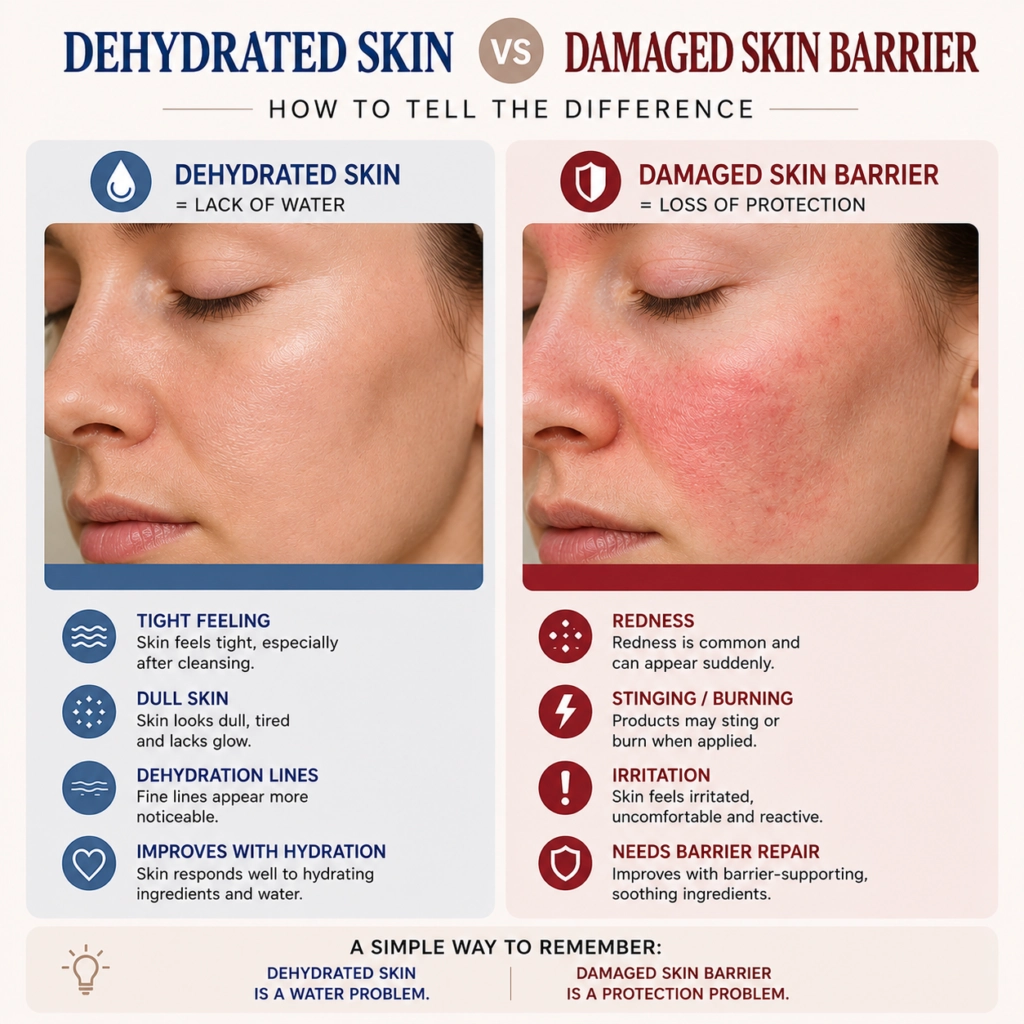
Dehydrated Skin vs Damaged Skin Barrier: The Key Differences
Dehydrated Skin
– Lacks water
– Often looks dull
– Feels tight
– May appear oily and dry at the same time
– Usually improves with hydration-focused skincare
Damaged Skin Barrier
– Protective barrier is weakened
– Skin becomes easily irritated
– Products may sting or burn
– Redness is more common
– Recovery usually requires simplifying your routine
A helpful way to think about it:
Dehydrated skin is usually a water problem.
A damaged skin barrier is usually a protection problem.
Can You Have Both at the Same Time?
Yes. In fact, many people do.
When your skin barrier becomes compromised, it can lose water more easily. This often leads to dehydration as well.
That’s why the two conditions are frequently confused.
If your skin feels tight, irritated, sensitive, and less resilient than usual, you may be dealing with both dehydration and barrier damage simultaneously.
I confused the two for years myself. What I thought was dehydration often turned out to be barrier damage — and treating the wrong problem only made my skin more reactive.
What Causes Dehydrated Skin?
Several everyday habits can contribute to dehydration:
– Not drinking enough fluids
– Dry indoor air
– Cold weather
– Excessive sun exposure
– Over-cleansing
– Harsh cleansers
– Lack of humectant ingredients
– Stress and poor sleep
Can stress and lack of sleep cause dehydrated skin?
Yes. Stress, poor sleep, and lifestyle factors can influence how comfortable and hydrated your skin feels over time.
What Causes a Damaged Skin Barrier?
Barrier damage is often linked to overdoing skincare.
Common causes include:
– Over-exfoliation
– Using too many active ingredients at once
– Retinol introduced too quickly
– Strong acids used too frequently
– Harsh cleansing routines
– Excessive scrubbing
– Environmental stress
– Chronic irritation
Many people damage their skin barrier while trying to improve their skin.
Can you accidentally damage your skin barrier?
Absolutely. Many people damage their skin barrier while trying to improve their skin through stronger products, more exfoliation, or introducing too many actives too quickly.
How to Help Dehydrated Skin
If dehydration is the main issue, focus on supporting your skin’s water balance.
Look for ingredients such as:
– Glycerin
– Hyaluronic Acid
– Panthenol
– Aloe Vera
– Beta-Glucan
Simple hydration-focused routines often work better than complicated multi-step routines.
How to Support a Damaged Skin Barrier
If your barrier is compromised, the goal is usually to reduce irritation and support recovery.
Helpful ingredients may include:
– Ectoin
– Ceramides
– Panthenol
– Colloidal Oatmeal
– Squalane
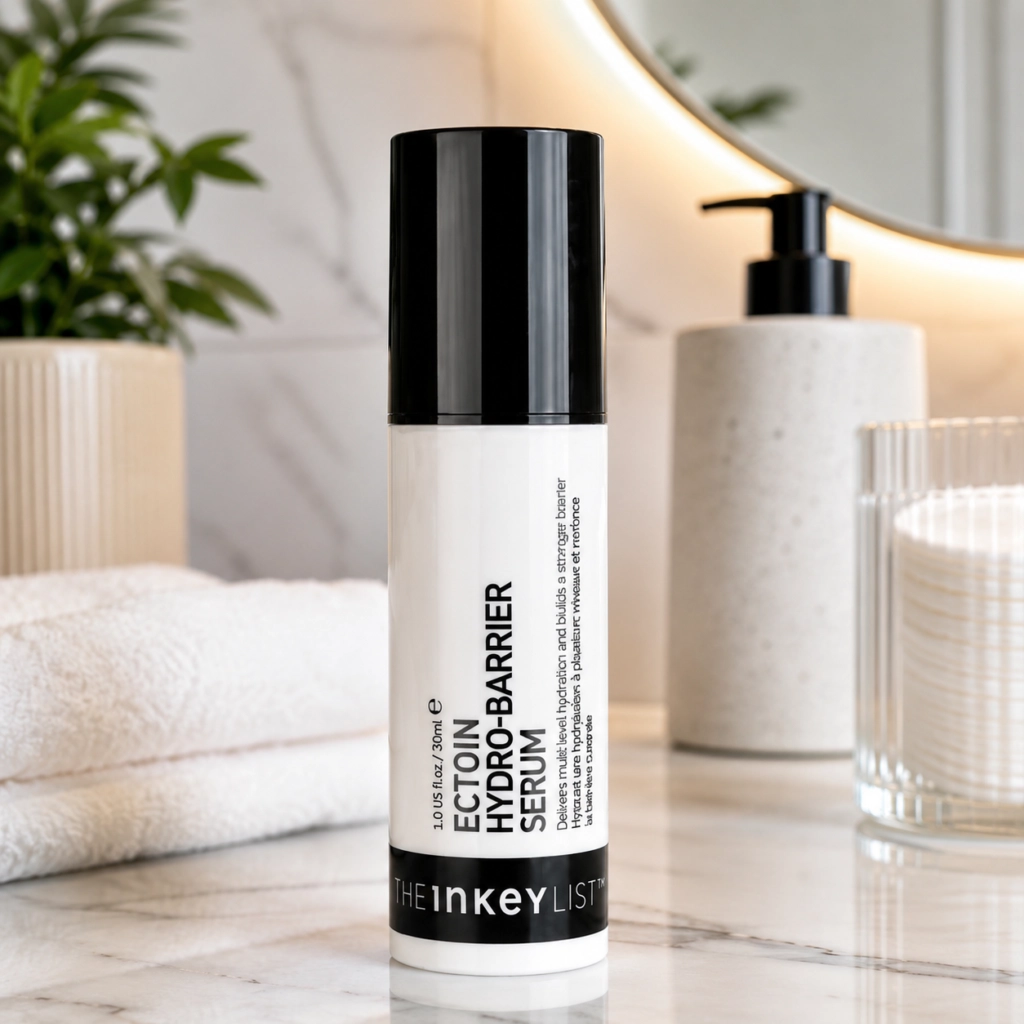
One ingredient that has become a staple in my own barrier-support routine is ectoin because of its ability to help support hydration and skin resilience over time.
At the same time, it often helps to temporarily reduce exfoliation and avoid introducing new active ingredients.
One product that has earned a permanent place in my barrier-support routine is The Inkey List Ectoin Hydro-Barrier Serum. If you’d like to see the exact serum I personally use when my skin feels dehydrated, reactive, or stressed, you can find it here.
Sometimes your skin needs less, not more.
Have you ever felt like the harder you tried to improve your skin, the more reactive it became?
I know I did. Learning to support my skin instead of constantly trying to fix it changed everything.
What Helped Me Most
One of the biggest lessons I learned was that not every skin problem requires another product.
When my skin felt tight, reactive, and less comfortable than usual, simplifying my routine often helped more than adding new treatments.
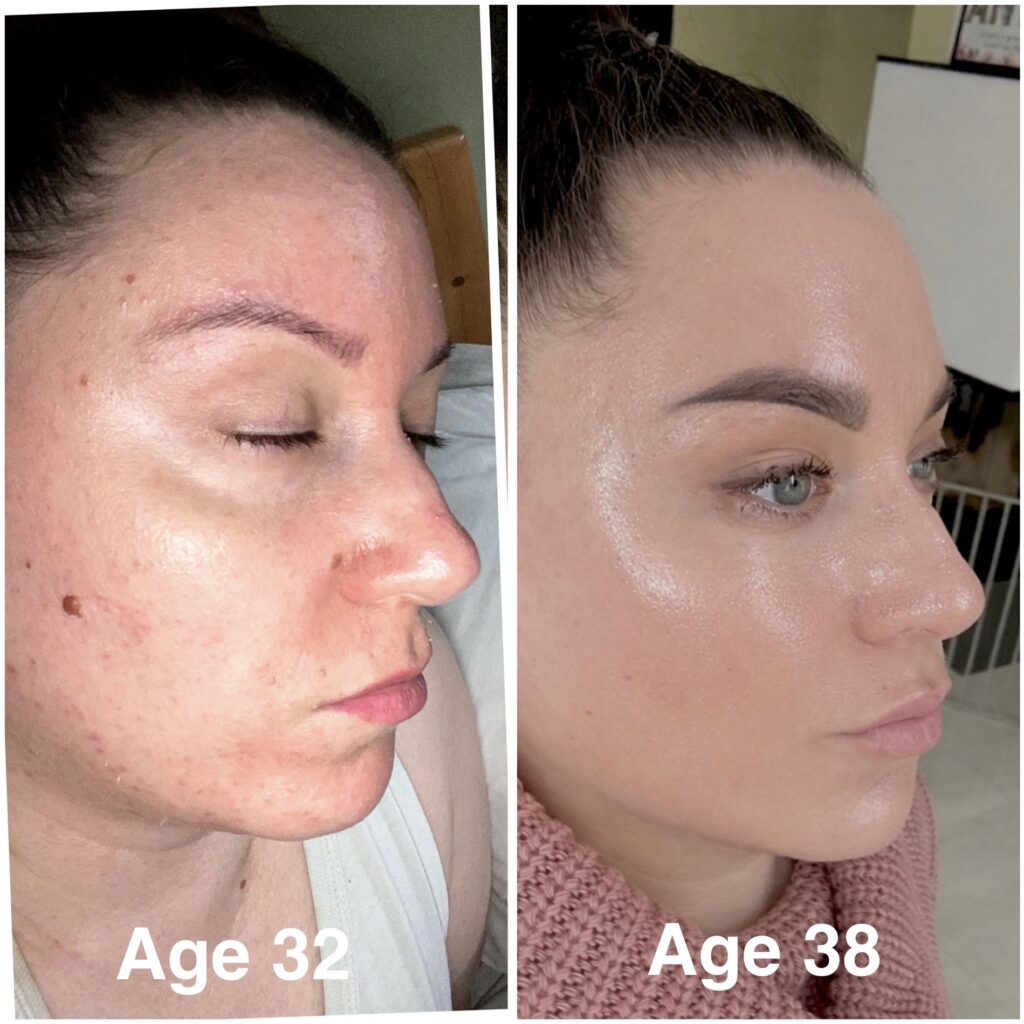
For me, the turning point happened after several weeks of focusing on hydration, barrier support, and consistency instead of constantly changing products. My skin felt calmer, looked more even, and stopped reacting to every small change in my routine.
This shift toward a simpler, long-term approach is one of the biggest reasons I started thinking more about skin longevity rather than quick fixes.
I also noticed that consistency mattered far more than constantly changing products or chasing trends.
Healthy skin rarely comes from doing more.
More often, it comes from doing the basics consistently.
This is what my skin looked like after simplifying my routine and focusing on hydration and barrier support instead of constantly switching products.
How long does it take for the skin barrier to recover?
Recovery looks different for everyone.
Mild irritation may improve within a few weeks, while more significant barrier disruption can take longer. Consistency and patience matter more than constantly changing products.
Once your barrier feels calm again, you can slowly reintroduce actives — my gentle fall exfoliation guide has a full 4-week plan for easing back into exfoliation without setting your skin back
Frequently Asked Questions
How do I know if my skin needs hydration or barrier support?
If tightness and dullness are your main concerns, dehydration may play a larger role. If you experience burning, stinging, redness, or sudden sensitivity, barrier support may be more important. Many people benefit from addressing both.
Can dehydrated skin become oily?
Yes. When skin lacks water, it may produce more oil in an attempt to compensate.
Does a damaged skin barrier heal on its own?
Mild barrier damage can improve over time, but reducing irritation and supporting the skin with gentle skincare usually helps the recovery process.
Is dry skin the same as dehydrated skin?
No. Dry skin is a skin type that lacks oil, while dehydrated skin is a condition that lacks water.
Can retinol damage the skin barrier?
Retinol itself is not harmful when used correctly. However, introducing it too quickly or using it too frequently can contribute to irritation and barrier disruption.
Final Thoughts
If your skin feels tight, uncomfortable, or unusually sensitive, identifying whether you’re dealing with dehydrated skin, a damaged skin barrier, or both can make skincare much less confusing.
Instead of adding more products, start by understanding what your skin is trying to tell you.
The Simplest Way to Think About It
- Dehydrated skin lacks water.
- A damaged skin barrier lacks protection.
- Dehydrated skin often feels tight and dull.
- Barrier damage often causes redness, irritation, and stinging.
- Many people experience both at the same time.
In many cases, a gentler approach, barrier support, and consistent habits can help your skin feel calmer, healthier, and more resilient over time.
For many people, that means more hydration, stronger barrier support, fewer unnecessary steps, and enough consistency to let the skin recover and function properly.
And if you’re trying to build healthy, hydrated, glass-like skin that lasts long term, starting with your skin barrier is often the most important step you can take.
This article may contain affiliate links. I only share products I personally use or trust.
⭐⭐⭐⭐⭐
Your article finally helped me understand the difference between dehydrated skin and a damaged skin barrier. Thank you!
Thank you so much! 💛 I’m so glad the article helped clarify the difference. Wishing you all the best on your skincare journey!